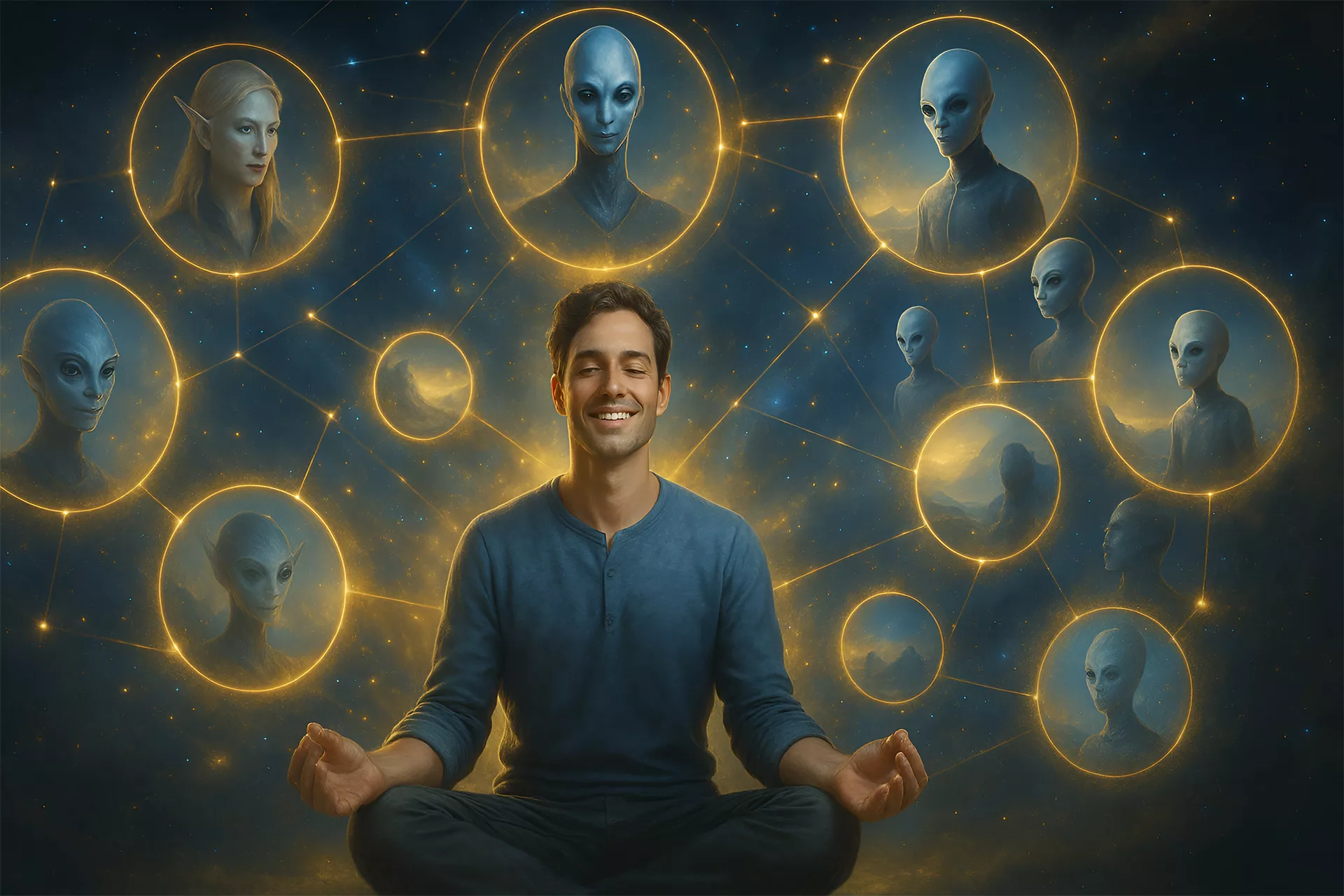

Understanding Exopsychology: The Study of Extraterrestrial Minds
In the vast expanse of cosmic exploration, a fascinating discipline has emerged at the intersection of psychology, astrobiology, and consciousness studies: Exopsychology. This pioneering field seeks to understand the potential mental processes, cognitive structures, and consciousness of non-human intelligences (NHI) that may exist beyond our terrestrial boundaries. As humanity’s gaze increasingly turns to the stars, exopsychology offers essential frameworks for comprehending the minds we might one day encounter.
What Is Exopsychology?
Exopsychology (from “exo” meaning outside or beyond, and “psychology” the study of mind) concerns itself with the theoretical psychological frameworks of extraterrestrial beings. Unlike traditional psychology that studies human minds within Earth’s evolutionary context, exopsychology ventures into uncharted territory—attempting to model how consciousness and cognition might develop in entirely different biological, environmental, or even non-biological contexts.
The term was popularized by Dr. Timothy Leary in the 1970s, though the concept has since evolved significantly beyond his initial formulations. Today, exopsychology represents a serious interdisciplinary approach to understanding potential non-human minds, combining insights from:
- Evolutionary psychology
- Cognitive science
- Astrobiology
- Xenolinguistics
- Consciousness studies
- Information theory
- Quantum cognition
Core Principles of Exopsychological Research
Transcending Anthropocentrism
Perhaps the greatest challenge in exopsychology is overcoming our inherently Earth-centric perspective. Human psychology developed through specific evolutionary pressures on a single planet. Extraterrestrial minds may operate according to fundamentally different organizing principles based on:
- Alternative biochemistries
- Different sensory modalities
- Novel environmental pressures
- Distinct evolutionary pathways
- Non-biological substrates (silicon-based, plasma-based, or quantum computing structures)
Exopsychologists must cultivate radical openness to cognitive architectures that may bear little resemblance to our own.
Consciousness Spectrum Hypothesis
A central theoretical framework in exopsychology is the consciousness spectrum hypothesis, which proposes that consciousness exists along multiple continuums rather than as a binary present/absent phenomenon. This spectrum may include:
- Information processing capacity
- Self-awareness levels
- Temporal perception
- Memory integration systems
- Collective versus individual awareness
- Dimensional perception (beyond our 3D+time framework)
Under this model, extraterrestrial consciousness might occupy regions of this spectrum inaccessible to human experience, potentially explaining challenges in communication and perception.
Applications of Exopsychology
Contact Protocol Development
One practical application of exopsychological research involves developing protocols for potential contact scenarios with non-human intelligences. This includes:
- Creating communication frameworks based on universal mathematical or physical constants
- Designing first-contact methodologies that minimize misinterpretation
- Establishing ethical guidelines for interaction
- Developing perceptual translation technologies
Understanding Anomalous Experiences
Exopsychology offers valuable frameworks for interpreting reported encounters with non-human intelligences, including:
- Close encounter experiences
- Telepathic communications
- Consciousness alteration during contact events
- Perception of multi-dimensional beings
- Altered states of consciousness that may facilitate contact
By applying exopsychological principles, researchers can examine these experiences through a lens that allows for non-human cognitive architectures rather than dismissing them outright.
The Intersection with Extrasensory Perception
Particularly relevant to NHI studies is the connection between exopsychology and extrasensory perception (ESP). Many exopsychologists hypothesize that:
- Advanced extraterrestrial species may utilize consciousness modalities that would appear as ESP to humans
- ESP may represent evolutionary adaptations that certain humans have developed that align more closely with extraterrestrial communication methods
- Meditation, remote viewing, and other consciousness-expanding practices might enhance human capacity to perceive and interact with non-human intelligences
The Future of Exopsychology
As humanity advances its space exploration capabilities and SETI (Search for Extraterrestrial Intelligence) efforts intensify, exopsychology stands to become increasingly relevant. Forward-thinking researchers are developing:
- Simulation models of potential extraterrestrial cognitive systems
- Quantum approaches to understanding non-local consciousness
- Advanced protocols for interpreting potential communication attempts
- Interdimensional theories of mind that transcend conventional physics
Conclusion
Exopsychology reminds us that our understanding of mind and consciousness remains profoundly limited by our terrestrial experience. As we reach toward the stars, we must simultaneously expand our conception of what consciousness might be beyond Earth’s evolutionary context.
Whether through technological detection methods, consciousness expansion practices, or theoretical modeling, exopsychology offers a critical framework for humanity’s greatest potential encounter—contact with minds unlike our own. By cultivating awareness of our cognitive limitations and openness to radically different forms of intelligence, we prepare ourselves for a future where humanity’s place in the cosmic consciousness spectrum becomes clearer.
For those exploring the frontiers of perception and contact, exopsychology provides not just theoretical frameworks, but practical approaches to expanding our conception of mind beyond the boundaries of Earth. The truly cosmic mind remains open to possibilities beyond our current imagination—and therein lies the profound promise of exopsychological exploration.
Jakub Qba Niegowski