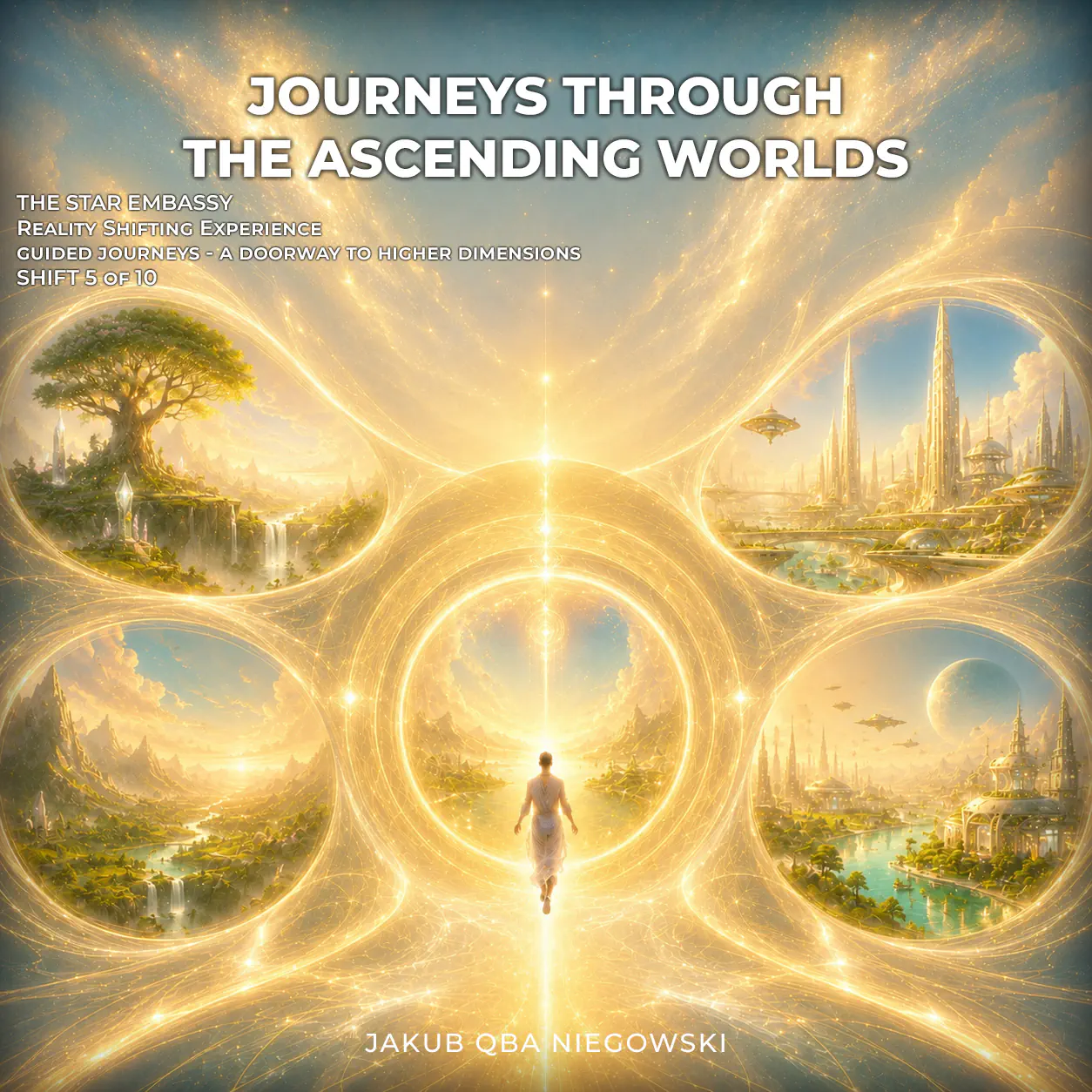

Whether you’re just beginning your meditation journey or have been practicing on your own for some time, there are moments when a little support makes all the difference. Guided meditation offers a range of benefits – including some that are less obvious than you might expect. For a more active alternative that delivers similar inner stillness, see how remote viewing works as a form of meditation.
Guided meditation is a practice in which an experienced person narrates a process that helps one person or a group of participants focus their minds on specific activities.
When meditation takes place in person, the facilitator’s role often goes beyond verbal narration – they also work on an energetic level, raising and shaping the energy of the space to support everyone meditating.
A common expression for this is “holding space” – maintaining high vibrations and creating a safe, supportive environment for meditation, whether in a one-on-one session or a group practice.
The Role of the Subconscious in Guided Meditation
One of the core challenges of meditating alone is that you must manage the entire process of your own focus without any outside guidance. You have to keep your mind from drifting, and whatever narration you provide for yourself may not always be convincing enough for your own subconscious.
What do I mean by that? People tend to accept what others tell them about the world more readily than they accept their own inner judgments. This is completely normal. When we’re guiding ourselves, we’re accustomed to weighing pros and cons constantly – which can undermine our sense of clear certainty.
But when we encounter someone we see as an authority, or simply someone we trust, it becomes far easier to accept what they say as true. This is especially significant in the context of meditation narration.
In practice: when a guide says “a column of brilliant white-golden light is now flowing down over you, filling you, cleansing you, and energizing you…” – the subconscious and conscious mind find it far easier to accept this as real than if you were telling yourself the same thing. That’s simply how it works.
I’ve often witnessed how my narration during meditation gives people access to inner spaces that seemed almost beyond reach – achieved through “merely” well-chosen words and sentences, with a small amount of additional energetic support. To put it plainly: the results often exceed expectations.
The Energy of the Facilitator
It’s worth noting that in any guided meditation – whether it’s individual energy work or a group session led by a specific person – the facilitator’s energy has an enormous influence on the process.
For this reason, it’s worth taking a careful look at the person who will be guiding you before committing to their sessions. As I mentioned, the facilitator literally creates the space in which the meditation unfolds. Of course, the participant’s own energy and inner process also manifest here – what we experience arises largely from within ourselves – but the facilitator acts as a kind of filter for specific energies aligned with their own nature, and like a lens, focuses and amplifies those energies within the participant.
I personally always recommend balanced facilitators who stay clear of extreme viewpoints. This gives the experience the best chance of being clean, harmonious, and genuinely supportive.
In my online Remote Viewing training programs, which include guided meditation as part of the practice, I always remind participants of the importance of remaining neutral toward whatever processes arise – so as not to impose personal perspectives or beliefs on others. Just as neutrality is fundamental in Remote Viewing itself, in guided meditation it’s equally essential: the aim of objective, conscious experience is not just a nice principle – it’s a cornerstone of authentic practice.
The Support Guided Meditation Offers
For many people, guided meditation – especially live, in real time (audio recordings can be very helpful, but they never carry the same power as a real-time session) – is the fastest and most effective path to activating their inner power and reaching what truly matters.
A facilitator doesn’t need to be a perfect ideal, but they do need the right skills and the awareness to work with people responsibly.
A good facilitator never imposes their own views or tells you what to think. Instead, they help you discover what’s worth noticing – on your own terms, through your own experience.
If you want a structured method that pairs that kind of guidance with genuine depth, consider remote viewing as a meditation practice – it gives many people exactly what they were seeking in meditation.
Guided meditation is a tremendous support and an incredible shortcut. Use it – but use it wisely and consciously.
Jakub Qba Niegowski – Extrasensory Awareness Development Specialist
You can also practice with our guided meditation recordings – downloadable audio to support your sessions anytime.