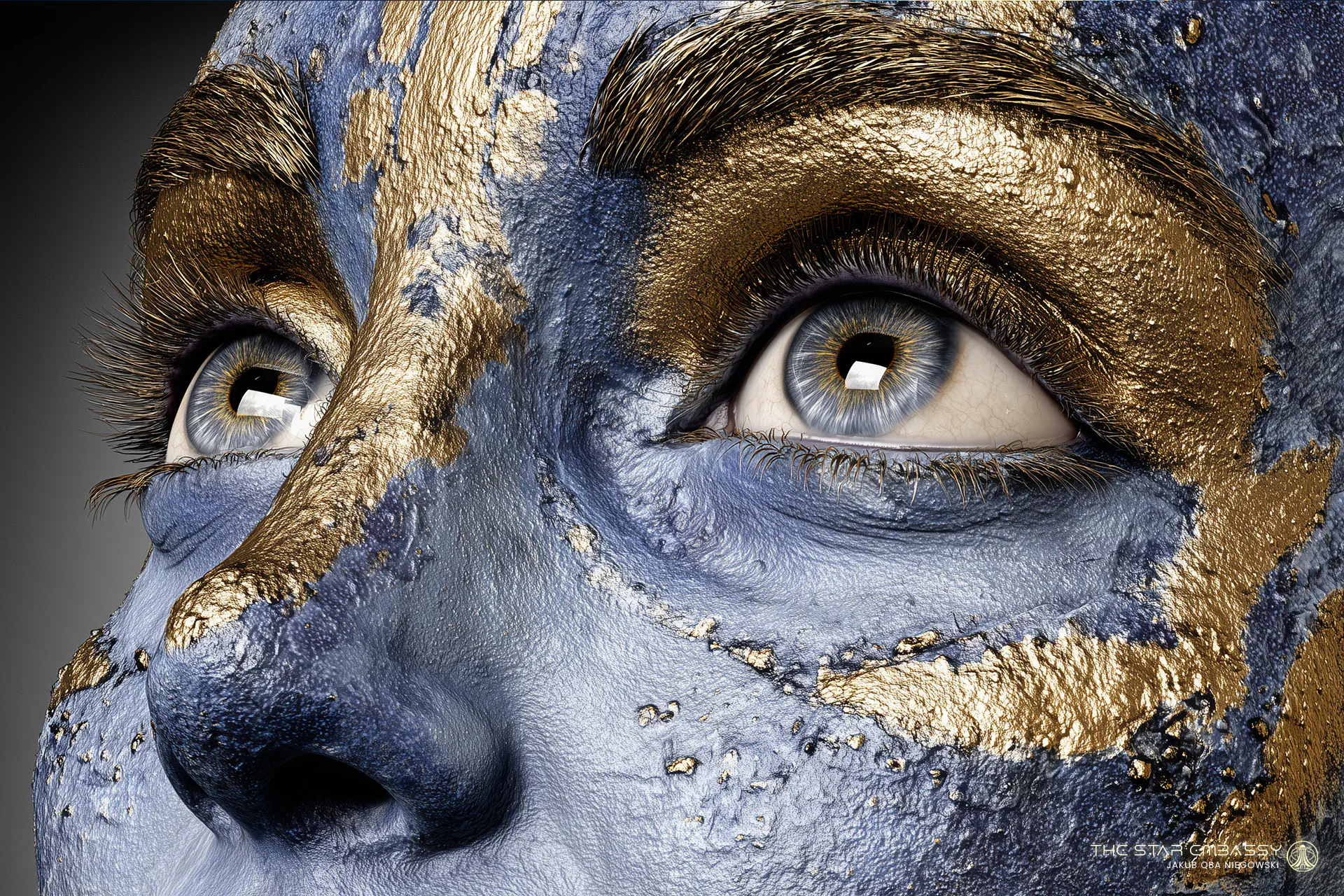
The short answer: The evolution of human consciousness – understood as the expansion of self-awareness, the transcendence of ego, and the discovery of our inner spiritual dimension – is the key yet still underestimated factor determining humanity’s future. Without deep psychological and spiritual development, no technological progress will guarantee lasting wellbeing or genuine evolution of the species. It won’t be algorithms or machines that change the world – it will be humans who first change themselves.
What Is the Evolution of Consciousness, Really?
The evolution of consciousness is the process of gradually expanding perception, self-awareness, and understanding of one’s own nature and place in reality – going beyond the biological and technological adaptation of the species. It is an internal transformation that moves from reactive thinking dominated by ego and survival instincts toward a deeper, more intuitive and integrated way of being in the world.
No technology is any better – or more dangerous – than the consciousness of those who create and use it. History demonstrates this with relentless consistency: every technological leap that was not accompanied by a parallel growth in psychological and moral maturity gave rise to crises. Not because technology is evil – but because a blinded human will always find a way to co-opt it in service of ego.
How Ego and Instinct Block Human Evolution
We live in a civilization that for centuries glorified reason, measurement, analysis, and matter. That’s valuable. That’s essential. But building identity exclusively on that foundation carries a cost.
A human reduced to a biological animal equipped with ever more sophisticated tools is still driven by the same primordial mechanisms: fear of rejection and death, the drive to dominate and possess, and the illusion of separateness from the rest of existence. Paired with modern technology and climate crisis, these become lethally dangerous.
Ego is not the enemy in itself. It becomes a problem when we mistake it for the entirety of our identity – when we have no perspective wider than its edges.
Why Experiences Develop Consciousness More Than Knowledge Does
You can’t know how a cake tastes by reading about it – you have to eat it. You can’t understand empathy from a definition – you have to actually feel what another person feels.
Consciousness grows through experience, not through absorption.
This is a fundamental distinction we often overlook in a culture of instant information. We are flooded with content – thousands of articles, videos, podcasts – but access to data does not automatically translate into inner transformation.
Genuine evolution of consciousness requires:
- Self-reflection – the ability to observe your own thoughts and emotions with a degree of distance
- Intentional experiencing – engaging with experience with full presence
- Integration – connecting new insights with how you function in daily life
- Humility – the willingness to revise beliefs you had taken for granted
What Is the “Super-Mind” – and What Does It Say About Human Nature?
More than twenty-five years of practice and research in the areas of extrasensory perception, expanded awareness, and states of enhanced perception lead me to conclusions that are difficult to fit within conventional categories.
I am persuaded of the existence of what might be called the “super-mind” – a primordial, all-encompassing intelligence or consciousness within whose framework and through whose agency all reality accessible to our senses and thoughts exists. In various traditions and knowledge systems, this principle has been called differently: God, the Absolute, the Quantum Field, the Source, Brahman, the Tao.
The key observation is this: the human being is not separate from this principle. We are its expression at the micro scale – possessing within our own nature subtle yet awakenable qualities that reflect the nature of the whole.
In practice, this means:
- Your mind has access to far wider resources than everyday experience suggests
- Intuition, precognition, deep meditative states, and Remote Viewing are not anomalies – they are signals pointing to a genuine connection with a larger network of consciousness
- The sense of separation – “me” versus “the rest of the world” – is an illusion resulting from a particular mode of mental functioning, not a description of reality
How Expanded Consciousness Affects the Quality of Life
The distinction between a person “blinded” by ego and a person developing their consciousness is not an abstract matter. It has very concrete, practical consequences.
| Life Area | Narrowed Consciousness (ego dominant) | Expanded Consciousness |
|---|---|---|
| Relationships | Reactive, rooted in fear and control | Authentic, rooted in presence and understanding |
| Decisions | Impulsive, driven by survival | Conscious, grounded in values |
| Perception of Reality | Rigid, mechanical | Flexible, multidimensional |
| Stress | Chronic, destructive | Regulated, treated as information |
| Creativity | Blocked by fear of judgment | Free, flowing from the source |
| Relationship with Death | Suppressed fear | Understood as a transition |
Expanding consciousness is not escapism or a flight from real problems – it is better equipment for solving them.
Which Methods Actually Develop Consciousness? (A Practical Approach)
Years of experience and work with people have surfaced several approaches that genuinely and measurably expand perception and deepen access to one’s inner life:
1. Meditation (regular practice, not a one-time event) This is not about relaxation. It is about training the capacity to observe your own psychological processes without identifying with them.
2. Remote Viewing (extrasensory perception through structured protocols) A method originally developed for military intelligence programs, now accessible to everyone. It teaches the expansion of conventional perception and directly demonstrates that the mind is not constrained by space or time in the way classical physics implies.
3. Working with the Subconscious Autohypnosis, lucid dreaming, and techniques for integrating subconscious material – these are tools that allow limiting patterns to surface and be restructured at a deeper level than intellectual analysis alone can reach.
4. Mindful Introspection Regular questions asked in living dialogue with your inner life: Why do I react this way? Where does this fear come from? What do I actually want? – not as ritual, but as genuine inquiry.
5. Contact with Nature and Information Silence Consciousness contracts in noise and expands in silence. Natural environments restore contact with rhythms that reach beyond the artificial time of screens.
My Vision of Humanity’s Future After 25 Years of Research
The future I hope for – for myself and for all of us – is not one in which technology disappears or humanity suddenly becomes “perfect.” That is not a scenario for utopians.
It’s something simpler and at the same time more profound.
Imagine a person who:
- understands that their mind shapes the experience of reality – and takes responsibility for that
- is not a prisoner of automatic reactions but can choose a conscious response
- feels connection with other people and with the wholeness of existence – not as a beautiful concept, but as a living experience
- builds technology in service of life, not in service of ego
Every person who enters this path changes not only themselves. They change the system – by the sheer fact of their presence and action.
The future of humanity will not be decided in laboratories or government offices. It will be decided – and is already being decided – in every mind that chooses the path inward.
Sources and Research
For those who wish to explore these themes through scientific literature:
- Institute of Noetic Sciences (IONS) – decades of research into consciousness and its anomalies: noetic.org
- Princeton Engineering Anomalies Research (PEAR) – long-term laboratory studies on the influence of mind on matter
- Dean Radin, Real Magic (2018) – a synthesis of decades of research on psi phenomena, published by Harmony Books
- Rupert Sheldrake, The Science Delusion – a critical analysis of the dogmas of materialist science in the context of consciousness
- Remote Viewing / Stargate Program – declassified CIA documents confirming the real-world application of extrasensory perception: cia.gov/readingroom
- Mind & Life Institute – dialogue between the Dalai Lama and leading scientists on the nature of mind: mindandlife.org
What is the difference between consciousness evolution and personal development? Personal development builds a better version of ego – better habits, greater productivity, a stronger sense of identity. Consciousness evolution goes deeper: it is about transcending ego as the managing center of one’s entire life and discovering a wider identity that is not threatened or limited in the same way.
Can you develop consciousness without spiritual practices or religion? Yes. The evolution of consciousness does not require belonging to any religious tradition. It requires only honesty with oneself, the willingness to observe one’s own psychological processes, and the courage to question what you take for granted. Meditation and Remote Viewing both offer entirely secular entry points into this work.
Jakub Qba Niegowski – Extrasensory Awareness Development Specialist
If you feel called to take part in this shift, the Superconscious Shift program is built for exactly this kind of growth.