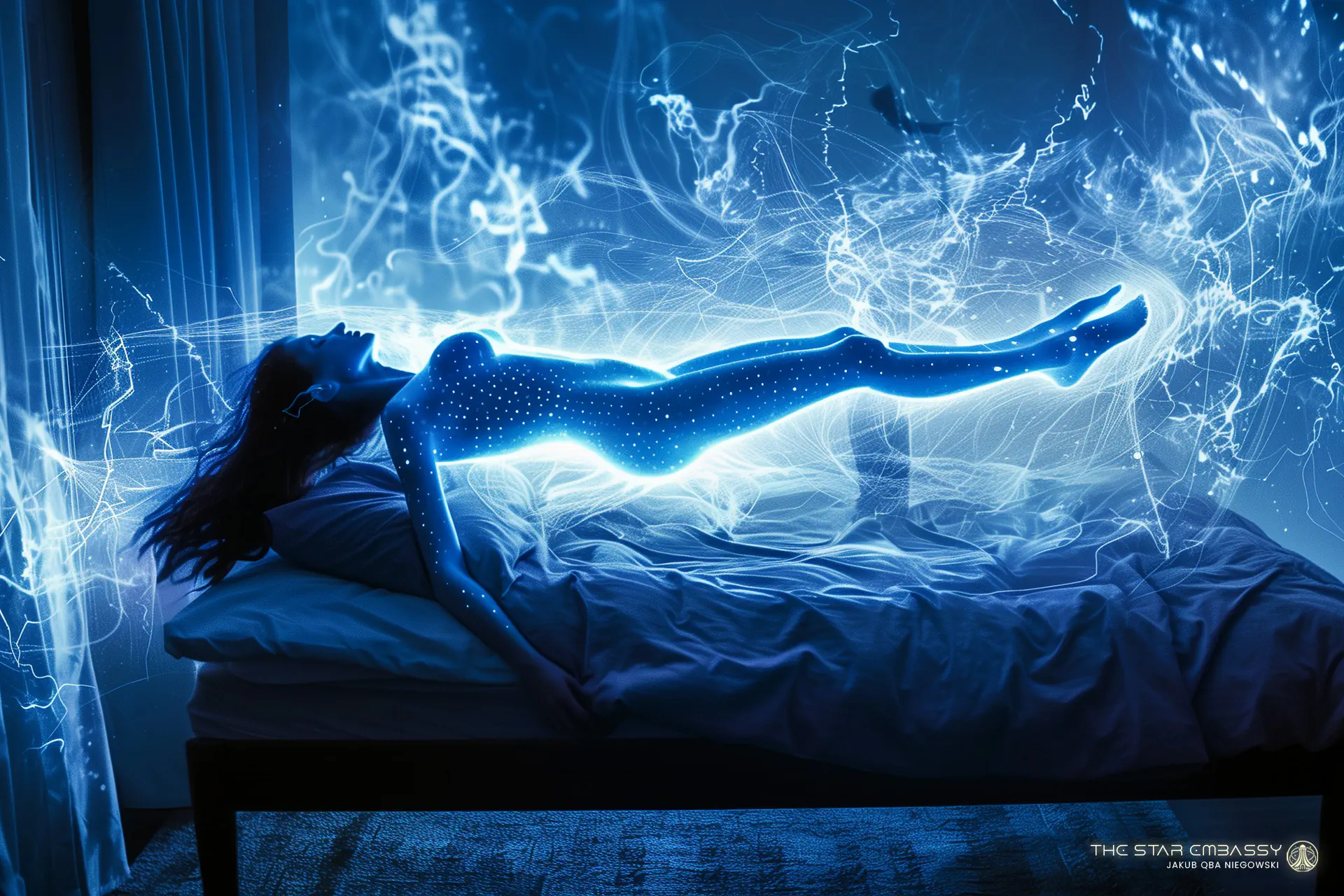
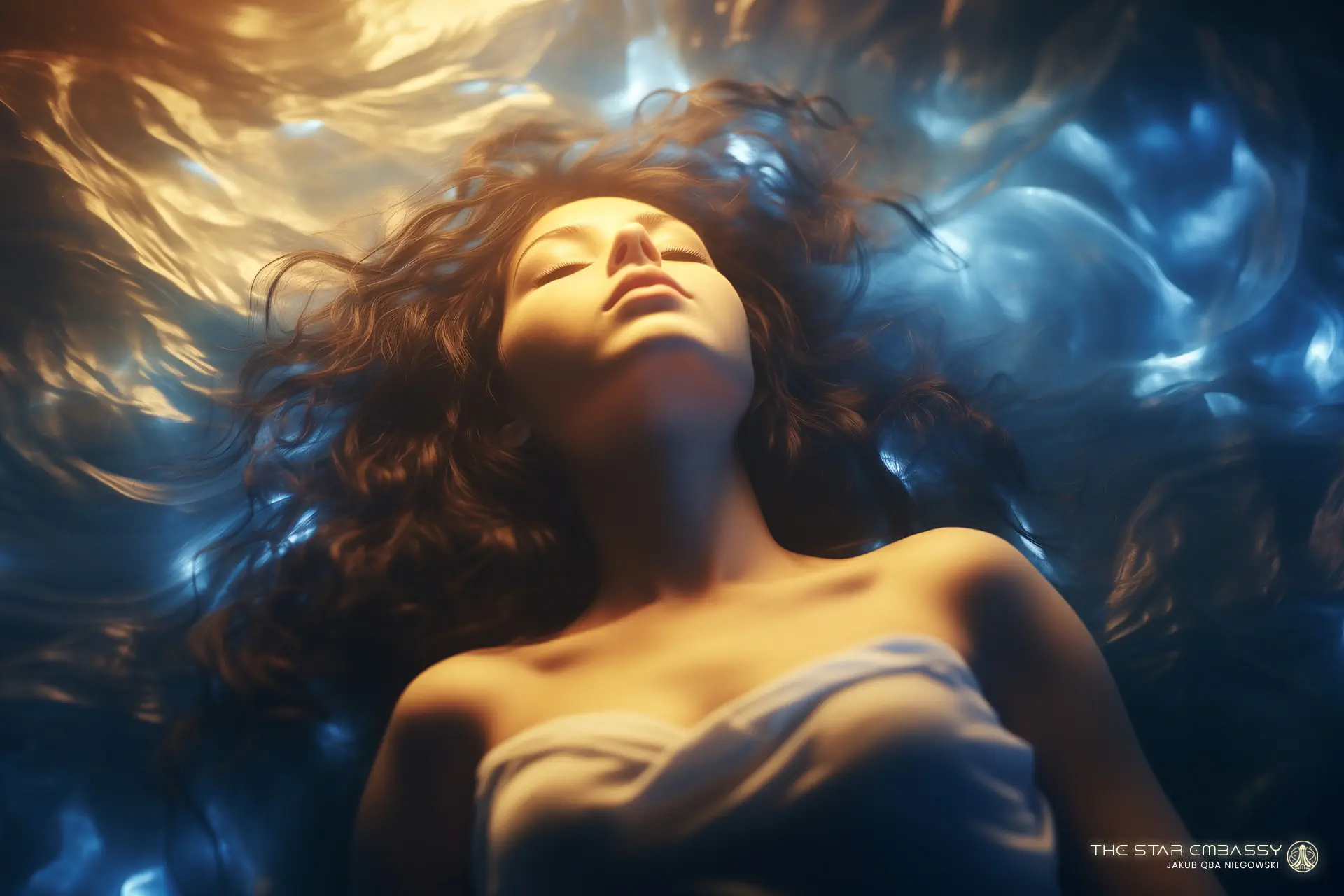
I remember my first OOBE in 1997. OOBE stands for Out of Body Experience – the experience of being fully outside one’s physical body. In a classic OOBE, the person has complete conscious awareness of separation from the physical body, with the unmistakable sense of being entirely beyond it. The impact is thunderous, and it leaves a person permanently changed – knowing, without any further doubt, that existence outside the material body is real.
The initial shock of that first experience quickly transformed into curiosity and fascination. I discovered that, contrary to what religion had taught me about the nature of reality, there was something – something vast – beyond the physical body.
The Challenge with OOBE
Over the years of practice that followed, I observed what is perhaps the central difficulty with OOBE: it is extraordinarily hard to achieve reliably. Even more advanced practitioners with natural predispositions might manage one OOBE out of every several or more attempts – and they remain a minority. Achieving OOBE “on demand” is something almost no one can do.
If you are one of the rare exceptions, congratulations. But there is an enormous number of people who genuinely want to experience out-of-body states, to explore non-physical reality – and simply can’t. Or they can only do it very rarely. So is there an alternative for the majority of us?
Even at my own peak of OOBE practice, I couldn’t do it reliably on demand. And beyond the difficulty of achieving the state itself, there is another challenge: once in an altered state of perception, it is very hard to determine whether a given vision comes from genuine perception or was simply the imagination at play – and imagination activates very quickly in those conditions.
What we are ultimately after is the genuine sense that what we perceive is real – that it exists independently of our imagination – and in this way to know that non-material reality is truly real. Beyond that, we want to research it and discover it. For that, we need tools that can clearly separate the activity of imagination from actual extrasensory perception.
The Mental Journey Alternative: Bruce Moen’s Approach
Bruce Moen found himself in a similar situation. He wanted to experience OOBE, but Robert Monroe’s out-of-body travel method simply didn’t work for him. He discovered, however, that he was able to perceive the non-physical reality that OOBE practitioners described – by focusing his mind on exploring that reality, without leaving the physical body.
In other words, Bruce Moen learned to perceive non-physical reality by directing his attention to it, while remaining in the physical body and maintaining contact with physical reality. He taught this approach in his workshops and described his experiences in his books – a fascinating complement to Monroe’s trilogy.
The problem with Mental Journey approaches, however, is the same one described above: distinguishing true non-physical perception from imagination remains difficult, and imagination is especially active when we know in advance what we are trying to perceive.
The Best Alternative: Remote Viewing
Remote Viewing solves the imagination problem through the use of blind targets. When researching material targets – physical locations, objects, events – the method provides built-in verification: after the session, the viewer can compare their perceptions to the actual target. This makes it possible to measure accuracy objectively and to train the skill over time.
The blind-target protocol works as follows: the viewer may participate in preparing a list of targets for research, but those targets must then be numbered by someone else and shuffled into a larger pool of targets – so that during any given session, the perceiving person cannot guess what the subject of research will be. This eliminates the activation of prior knowledge and imagination before the session even begins.
When Remote Viewing is used to research non-material targets – for example, aspects of non-physical reality (originally RV was applied mainly to verifiable material targets, but it turned out the method can research practically anything) – gaining certainty about whether what we perceive is actually there requires some additional source of confirmation. This typically means group sessions where multiple independent viewers research the same target without contact, and their independent results are compared.
Remote Viewing, understood in this way, is not just a research tool. It is the most accessible, structured, and verifiable form of out-of-body-style exploration available – one that does not require achieving the difficult OOBE state, and that comes with built-in mechanisms for distinguishing genuine perception from imagination. For those who want to explore non-physical reality seriously and rigorously, it is the natural path forward.
Jakub Qba Niegowski – Extrasensory Awareness Development Specialist
For a more reliable, guided path, you can explore remote viewing individual coaching.