The foundation of any genuine personal development is self-knowledge – awareness of who you are, how you perceive reality, and what potential you carry within. A surprising and rarely discussed fact is that one of the most effective paths to deep self-knowledge is practicing extrasensory perception. Not because ESP is a metaphor for self-development – but because perception training demands a precise self-observation that no other personal development method delivers in as direct a form.
Why Self-Knowledge Is the Foundation of Personal Development
Before you can consciously build your life – pursue goals, develop relationships, discover your possibilities – you first need to know what you’re building with.
Self-awareness means knowing:
- what internal filter you use to interpret reality,
- what thought and emotional patterns drive your behavior,
- what you’re truly capable of and what still waits to be discovered,
- where your automatic reactions end and conscious choice begins.
Only this kind of knowing allows you to genuinely work on yourself. Without it, even the best self-development tools operate in the dark – on the surface, without access to the deeper layers that actually run your life.
If you want to grow – know yourself. But to truly know yourself – pay attention to perception.
What Is Extrasensory Perception and What Does It Have to Do with Personal Development?
At first glance, ESP seems oriented exclusively outward – toward perceiving something beyond the reach of the ordinary senses – and appears to have little to do with inner work.
This is an illusion.
To become capable of receiving subtle intuitive signals, you first have to learn to observe yourself. The paradox is that learning to perceive what is external rests on the ability to distinguish what is internal: which signals come from authentic extrasensory perception, and which are products of your own mind, emotions, and internal thought processes.
Practicing ESP is therefore a school of self-observation from the very first session – and an unusually demanding one.
How Perception Training Leads to Deep Self-Knowledge
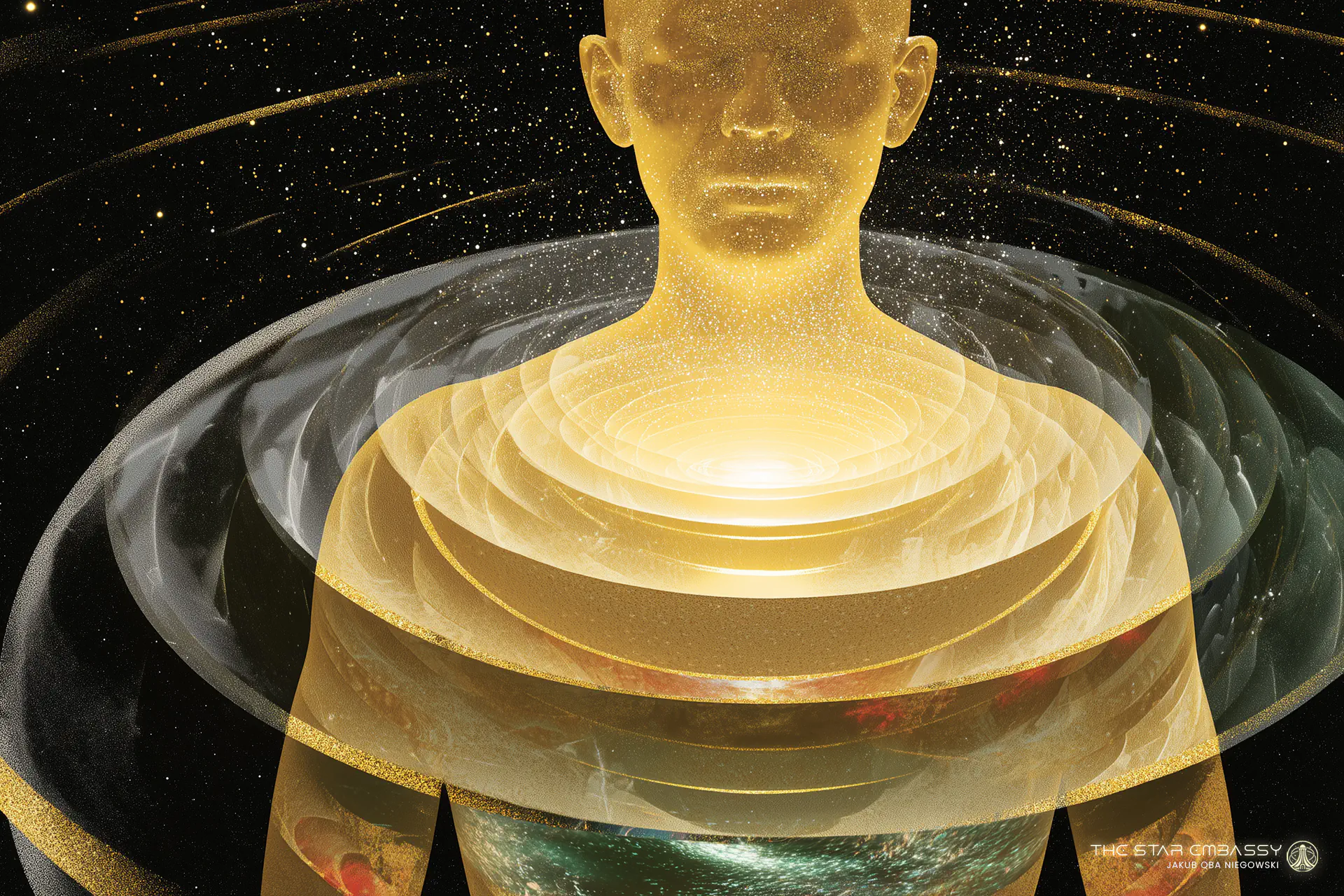
Perception – understood broadly – is not just what you see and hear. It is above all the prism through which you interpret every experience: your own filter composed of beliefs, emotions, history, and thought patterns.
Most people spend their entire lives looking at themselves and the world through this filter – without realizing it is there. Perception training is one of the few practices that lets you turn around and look directly at the prism itself.
Once you see the filter – you gain real freedom. You gain access to layers that previously operated entirely outside your awareness. You develop the capacity to witness your own mind: to observe your thought and emotional processes without being identified with them.
This is one of the deepest forms of self-knowledge available to a human being.
The Military RV Programs and a Revolution in Consciousness Development
During the Cold War, the US and Soviet armies ran extensive research programs on extrasensory perception, focused primarily on Remote Viewing – the method of perceiving distant targets through non-ordinary means.
An unexpected side effect emerged – one that was, from a military standpoint, unwanted. From the perspective of human development, it was revolutionary.
People who regularly practiced extrasensory perception experienced an accelerated development of consciousness. Their worldview shifted, their value systems deepened, their capacity for self-observation grew, and their understanding of themselves and the world around them became more profound. Many practitioners began developing aspirations that went well beyond executing intelligence missions.
After portions of these programs were declassified, a significant number of those participants went on to share their knowledge and inspire others toward change. Their example makes one thing unmistakable: training perception in the “super-range” develops super-consciousness.
| Dimension | Standard Self-Development | ESP / Remote Viewing |
|---|---|---|
| Level of work | Primarily conscious | Conscious and subconscious simultaneously |
| Tool for insight | Analysis, reflection, coaching | Direct observation of your own stream of consciousness |
| Feedback | Delayed, external | Immediate – each session is a mirror of your filters |
| Emotional impact | Indirect (through belief work) | Direct – perception requires emotional neutrality |
| Long-term effect | Change in habits and beliefs | Permanent expansion of consciousness and perception of reality |
Each perception session is an immediate test of self-awareness. The difference between what you imagined or expected and what you actually received is precise information about your internal filters. No other exercise delivers that kind of feedback with the same speed and accuracy.
Life Areas Transformed by Developing Extrasensory Perception
In relationships: deeper self-knowledge means greater clarity about your real values and needs – and a healthier ability to tell them apart from projections, fears, and expectations.
In work and decision-making: when you know your cognitive filters, you make more conscious decisions and become less susceptible to unconscious bias. You also align more effectively with your authentic values and needs.
In achieving goals: self-knowledge reveals both your real resources and the blocks that have been operating below awareness. Instead of fighting invisible resistance – you can see it, name it, and work through it.
In spirituality and the search for meaning: awakened perception opens questions and experiences that are difficult to reach by other paths. Not as theory – as direct experience.
Expert Insights: Why Perception Is the Gateway to Self-Development, Not an Add-On
There is a widespread misconception: extrasensory perception is treated as an exotic field separate from “serious” self-development. In reality, the opposite is true.
Perception – the way we receive and interpret reality – is the foundation on which all self-awareness is built. If your perception is limited, so is your ability to know yourself. If your perception is precise and trained, your self-knowledge becomes correspondingly deep.
“Only if we truly Perceive – will we be able to fully use the knowledge and power that surrounds us.”
Sources and Further Reading
- The Monroe Institute – one of the longest-operating centers for research into expanded states of consciousness; documents the impact of perception work on personal development and consciousness transformation.
- Dean Radin – Institute of Noetic Sciences – a scientist conducting rigorous laboratory research on ESP; his publications bridge extrasensory perception and the science of consciousness.
FAQ
Does ESP help in everyday life? Yes – and not only in the obvious sense of “perceiving more.” The real benefit lies in the growth of self-awareness, intuition, and quality of decisions. People who practice ESP regularly report becoming better at reading situations, understanding their own reactions, and making choices aligned with their authentic values.
How does developing ESP affect relationships? Perception becomes a conscious tool rather than an unconscious reaction. But to use it well in relationships, you first need to know your own mind – to distinguish an authentic intuitive impulse from fear, expectation, or habit. This is exactly what ESP practice teaches.
Is ESP the same as intuition? Not entirely. Intuition is primarily rapid, unconscious processing of accumulated experience. Extrasensory perception goes beyond that mechanism – it involves receiving information independent of prior knowledge. ESP training teaches you to distinguish both channels and use each consciously.
Does developing ESP require special predispositions? No. Research and practice show that extrasensory perception is a trainable capacity, not an innate gift reserved for a few. Consistent, structured training – especially Remote Viewing – develops perception skills in virtually any practitioner who approaches it systematically.
What makes Remote Viewing an effective personal development method? Remote Viewing is a methodical, structured form of ESP training with clear protocols and immediate feedback after each session showing what you actually received versus what your mind added. It is one of the most direct and objective tools for examining your own perceptual filters – making it one of the most powerful self-knowledge practices available.
Jakub Qba Niegowski – Extrasensory Awareness Development Specialist
You can develop these abilities step by step in our live online remote viewing course.