Thanks to the growing popularity of meditation, you’ve likely heard that it brings a wide range of benefits – for both the body and the spirit. The natural next question is: OK, but how do you actually meditate?
In this article I’ll walk you through what meditation is, how to practice it, and introduce you to several effective meditation techniques.
We live in a world where finding inner peace, balance, and harmony has become especially important for our functioning, health, and overall well-being. Our minds are bombarded with stimuli at an intensity humanity has never before experienced. An overloaded mind leads to poorer functioning – fatigue, irritability, and disconnection become the norm.
From a spiritual perspective as well, inner harmony is the foundation of any meaningful path of development. A person who is destabilized and chaotic has no stable ground from which to grow – constantly knocked off balance by outside influences.
Meditation is therefore an important foundation for both personal and spiritual development in the broadest sense. It can raise our intellectual capacity and our vibrations – the quality of our existence from a spiritual standpoint. In short, meditation develops us on every level – mentally, energetically, and spiritually.
Meditation, from the Latin meditatio, literally means deep reflection, contemplation, deliberate thought. In practice, meditation is exercised by focusing the mind on a specific inner task and carrying it out through directed inner intention.
Meditation can be an almost immediate way to raise your energy level, improve your mood, or quiet your thoughts – and you don’t need any special body position to do it. Only a narrow range of techniques require specific postures, and those aren’t really recommended for beginners, since they also require appropriate physical preparation.
Many excellent meditation techniques can be applied while riding public transportation, working in an office, or in other everyday circumstances – simply by directing your mind appropriately.
Meditation Technique 1: Relaxation
The ability to relax is extraordinarily important in today’s world, which often demands we remain in a state of readiness for long periods. Proper relaxation also facilitates concentration, eliminating distracting signals from the physical body. It allows us to shed the accumulated weight of negative emotions that builds up to a greater or lesser degree each day – emotions that, beyond worsening our mood and harming our health, can actively interfere with any mental or spiritual practice. Mastering relaxation is the foundation of all inner work.
Two Relaxation Techniques:
The first is designed primarily to remove burdening psychic energy – negative feelings, tension, emotional residue. The second focuses mainly on physically relaxing the body. Both are important, and it’s worth giving each enough time to produce satisfying results.
Energetic Relaxation Meditation
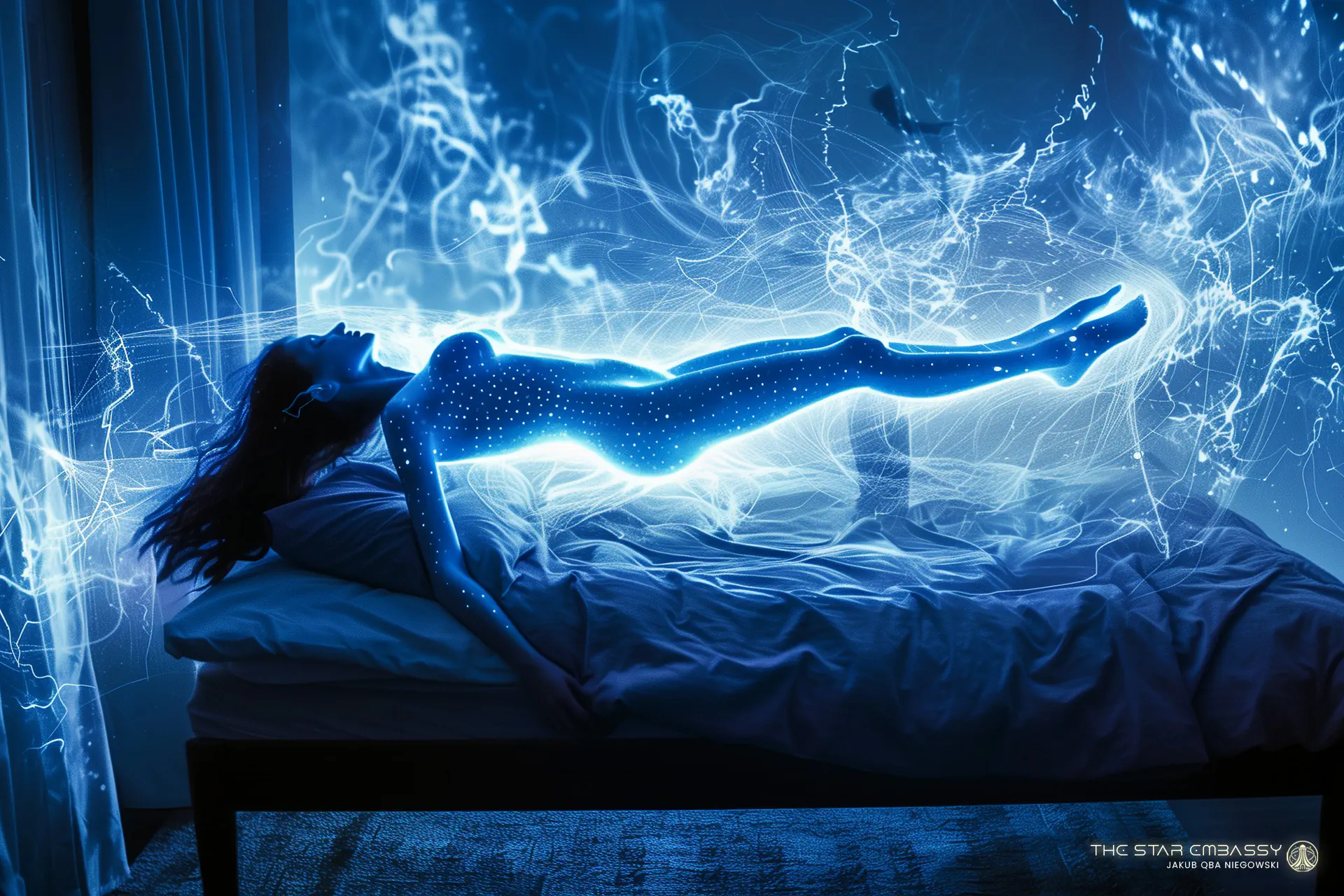
Find a comfortable position. I personally prefer lying on my back with arms alongside the body (place something small under your head), spine reasonably straight, with no pressure cutting off circulation to any part of the body. Once settled, begin breathing calmly and evenly at a natural, pleasant pace. Visualize (note: visualization doesn’t necessarily mean seeing images – it also includes other forms of imagining and sensing) how with each exhale, all negative feelings – irritation, sadness, fear – float away. On each inhale, visualize white, luminous energy filling you, bringing a sense of calm and blissful relaxation, adding strength. Repeat until you reach a satisfying result.
Body Relaxation Meditation
Lie down comfortably. Begin counting slowly:
- 1 – Gently move your facial muscles, then let them fully relax.
- 2 – Gently move your neck muscles, return to the most comfortable position, and fully relax them.
- 3 – Now the abdominal and chest muscles. Take a deep breath lifting the diaphragm, then release freely – relaxing the entire torso.
- 4 – Move your arms gently, tense them briefly, then let them relax as fully as possible.
- 5 – Legs – same as arms: gentle movement, brief tension, then full release.
- 6 – Focus once more on the entire physical body and its complete relaxation.
With practice, simply counting the numbers will trigger automatic relaxation of the corresponding muscle groups – it’s a matter of training. Count slowly and don’t rush. Wait for each area to actually relax before moving on. You can expand the count and assign more body areas to individual numbers as needed – it’s a matter of personal requirements.
Meditation Technique 2: Concentration and Visualization
Concentration is a critically important ability. Without it, all mental actions become clumsy and chaotic – inability to maintain a visualization or sustain focused will generally leads to failure. Visualization, meanwhile, is the skill that – alongside the expression of intention – directs energy and contributes to many creative and spiritual practices.
The good news: training concentration and visualization can happen simultaneously and be surprisingly simple.
Sit or lie down in a comfortable position. Choose an object to focus on – I recommend a fruit. Pick one (it exists only in your mind, so no physical fruit needed), then close your eyes. Begin to visualize it intensely. Make its image appear behind your closed eyes. Feel its texture, taste, smell, and all its other qualities. Make it as real as possible.
You’ll likely encounter the challenge every beginner faces: thoughts about the fruit start to “escape,” replaced by other random thoughts. The mind begins to wander. When you notice the object of visualization has slipped away, calmly return to it. This is natural – and the practice is precisely about cultivating this awareness: noticing when the object of concentration has drifted, and developing the ability to return.
Practice this regularly and you’ll observe steady improvement – visualization becomes clearer and easier, and the mind stops wandering and stays focused. The process is gradual, but effects appear quickly and these skills are relatively easy to develop.
Meditation Technique 3: Chakra Meditation
Chakras are centers of energy control and flow within the human energy body. Properly developing and balancing them can be enormously significant for both psychic abilities and overall health and functioning. This type of work is somewhat more advanced and requires extra care – it is not recommended for people with epilepsy, heart conditions, or serious psychological disorders.
Chakra Meditation with White, Luminous Energy
Lie comfortably on your back with arms alongside your body. Begin to visualize white, luminous energy gently entering your root chakra (located midway between the genitals and the anus). Feel its energy; feel your chakra growing in strength and filling with beneficial energy.
Then allow the energy to begin moving upward to the chakra located about three centimeters below the navel. Let the energy continue flowing through the root chakra, but direct its greater portion upward. Feel the warmth of this energy at work. Then move it to the solar plexus chakra – continuing to let it flow through the root and sacral chakras as it rises.
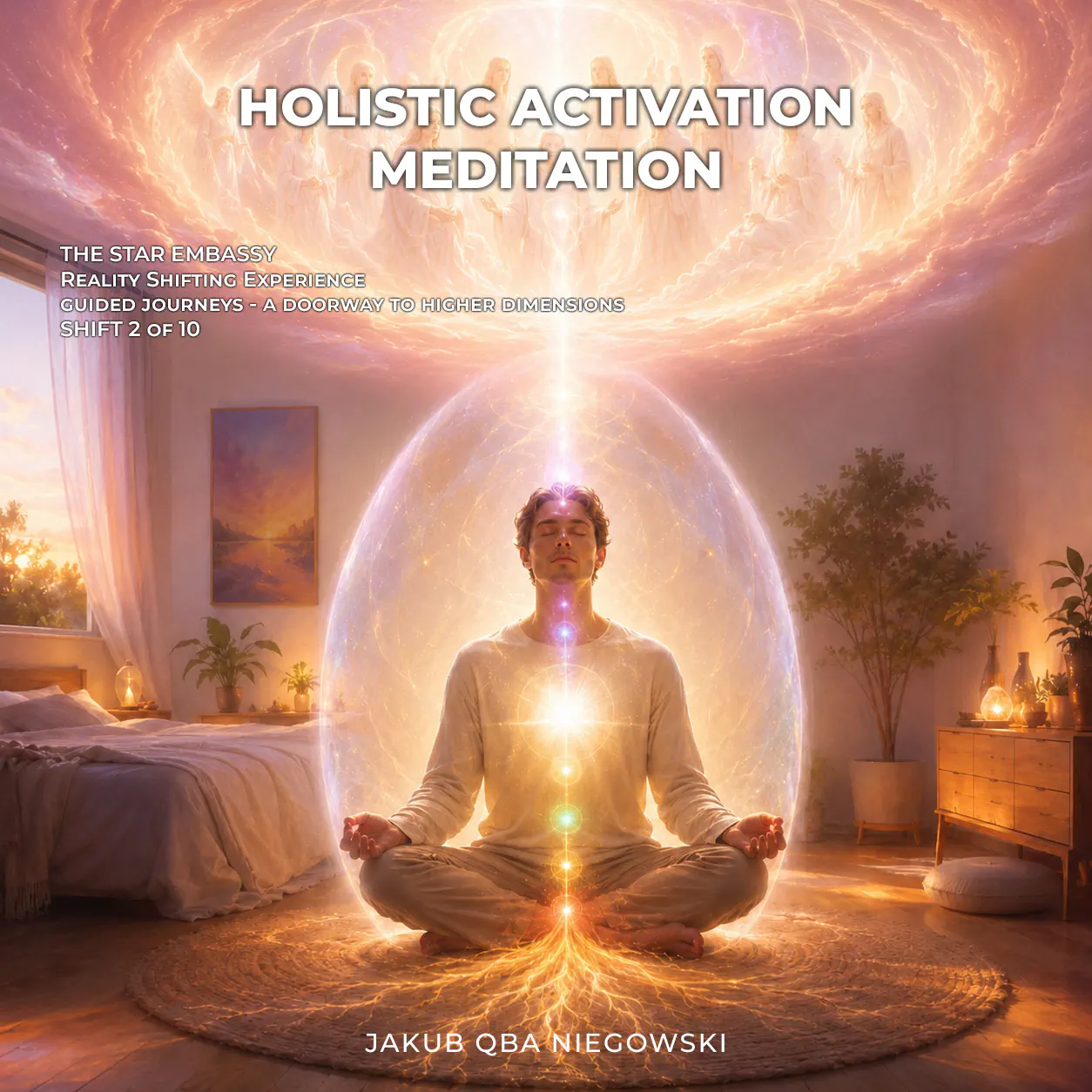
Continue the same way through each chakra: the heart chakra (roughly the center of the chest), the throat chakra (center of the neck), the third eye (center of the forehead at eyebrow level), and finally the crown chakra (the entire area of the top of the head above the hairline).
Once you feel abundant energy within you, allow the excess to begin flowing out through the crown chakra, gently surrounding you so that a luminous egg forms around your body. Then let it return and flow back in through the root chakra. Practice for 15 to 20 minutes.
Chakra Meditation with Colors
Lie comfortably as described above. Visualize a column of red light flowing down from above onto your root chakra. Feel its energy filling and illuminating that chakra. Without interrupting that visualization, add an orange column of light for the sacral chakra. Then add yellow for the solar plexus; pink or green for the heart chakra; blue for the throat; violet for the third eye; white for the crown.
Sustain the visualization of all these colors simultaneously for as long as you can – up to 30 minutes maximum. Both chakra meditations are relatively simple and effective. Which one suits you better, you’ll discover for yourself. What matters is using a chosen technique regularly – one or two sessions won’t produce lasting change, just as one or two gym sessions won’t make you an athlete.
Meditation Technique 4: Mantra Meditation
A mantra is a sound with a vibration intended to produce a specific effect in the meditator. This doesn’t mean the mantra needs to be spoken aloud – the vibration exists on a spiritual level and doesn’t need to be audible to affect you. An added benefit of mantra meditation is concentration training, since the mind must be kept continuously occupied with the mantra’s rhythmic, calm repetition.
Here is one of the more universal mantra meditations:
Find a comfortable position – lying or seated, with the spine reasonably upright and the body easy to relax. Focus on your breath. Let it become even and natural. Then, as you inhale, begin silently vibrating OM. During the pause between inhale and exhale: TAT. On the exhale: SAT. Adjust the length of these sounds to your breathing pace so they don’t alter its rhythm but become an integral part of it.
If thoughts arise and begin to interrupt the mantra, calmly return to it. The mantra will gradually lead you into higher states of mind – something you’ll notice on your own. At a certain point the mantra will seem to fade away. Don’t force yourself back to it; at that point, simply end the meditation calmly and slowly return to the present.
There are many other meditation techniques – I’ll introduce more of them in future articles.
Jakub Qba Niegowski – Extrasensory Awareness Development Specialist
To experience this directly, explore our guided meditation recordings.